Our Guiding Principles
Fell Kin is a self-directed, consent-based setting for home educating families in South Cumbria, allowing young people to come together and be their authentic selves.
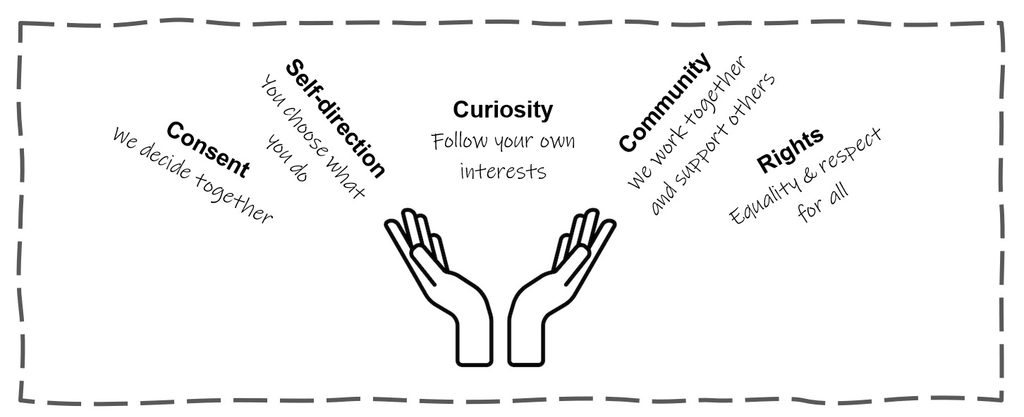
The way we make decisions and the flow of our day is underpinned by the following set of guiding principles:
Consent-Based
Young people have ownership and responsibility for the day to day running of their own community through consent-based decision making.
Being able to say an authentic yes, no or maybe (and change their mind!) when making decisions gives young people a greater understanding of who they are, exploring their own boundaries and respecting the boundaries and consent of others.
Self-Directed
We recognise a young person’s natural drive to understand themselves and the world around them. Autonomous, self-directed learning leads to high levels of intrinsic motivation, self-esteem, confidence, resilience and ultimately, good mental health.
We nurture exploration and support our community to follow their interests and to continually seek new ideas, perspectives, skills and experiences.
Curiosity-led learning
There is learning potential in everything. We are looking beyond traditional subject boundaries and biased notions of which activities are valued more than others.
We welcome critical thinking, creativity, investigation, curiosity, play, rest and interdisciplinary thinking and doing.
Community Conscious
We recognise that people have different circumstances and ensure that members of our community are supported in a way that is fair and just and meets their differing needs.
We make decisions together as a community and collaboratively plan how to spend our time. We make sure that everyone in the community feels heard and has an equal opportunity to put forward ideas or to raise any issues.
We support the community to solve problems together and recognise risk as it arises. When risk needs to be managed, we help those involved to co-create a solution.
When conflict arises, we support the community to navigate the situation and offer mediation when appropriate, working to increase understanding and find ways to reach unmet needs.
We actively build relationships with the wider community.
Children’s rights, social and environmental justice
The UN Convention on the Rights of the Child states that children’s education should:
“help them fully develop their personalities, talents and abilities. It should teach them to understand their own rights, and to respect other people’s rights, cultures and differences. It should help them to live peacefully and protect the environment.”
We seek out resources and opportunities to support our community in actively protecting themselves, each other and the world around them.